

 DE
DE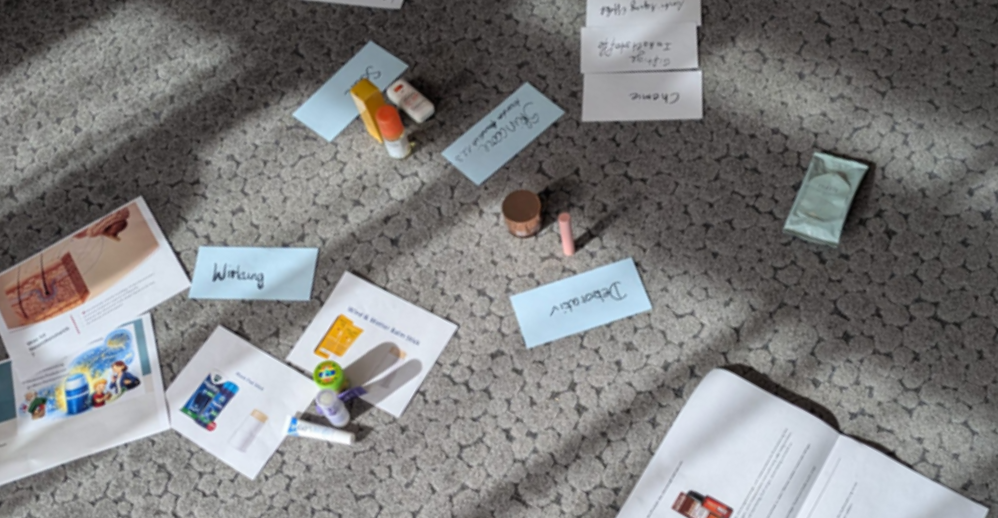
On March 5, 2026, Velvety hosted the Day of New Ideas for the first time. It is a format that deliberately breaks with the daily routine.
The focus was not on “creativity for the sake of creativity,” but on a very concrete objective:
New product ideas were to be developed in a way that they are realistically feasible, can be seamlessly integrated into existing processes, and can be produced using our current production facilities. At the same time, the goal was not only to generate ideas, but to translate them directly into market-ready concepts.
In practical terms, this meant:
Each idea had to clearly answer who the product is intended for, what specific benefit it offers, and why it would actually be purchased. This was complemented by considering how it could be produced, packaged, and distributed.
Because this is exactly where many innovation processes fail, not due to the idea itself, but because of the missing connection to operational reality and the market.
The start: Energy instead of idle time
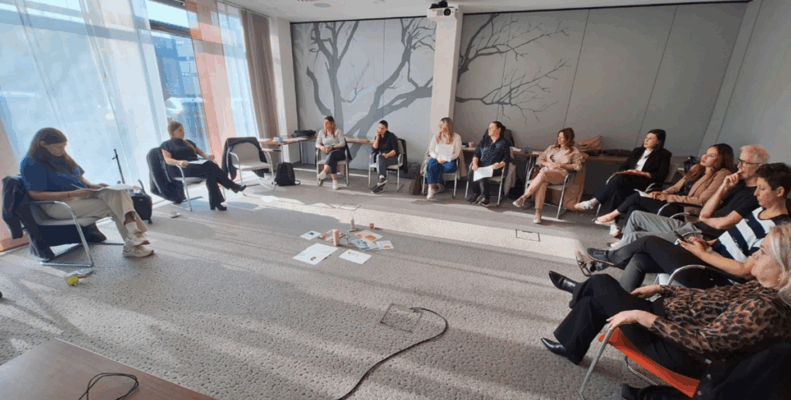
The day deliberately started in an unconventional way, with three short warm-up exercises, including elements of laughter yoga.
The goal was to create an open and dynamic atmosphere right from the start and to bring everyone out of their usual working mode.
And yes, also a little bit out of their comfort zone. 😊
The effect was immediately noticeable: the initial barrier quickly disappeared, the group was fully present, and the first discussions emerged almost naturally.
Phase 1: Understanding what really works
As preparation, each participant brought along a personal favorite cosmetic product.
The key question behind this:
Why does this product truly work?
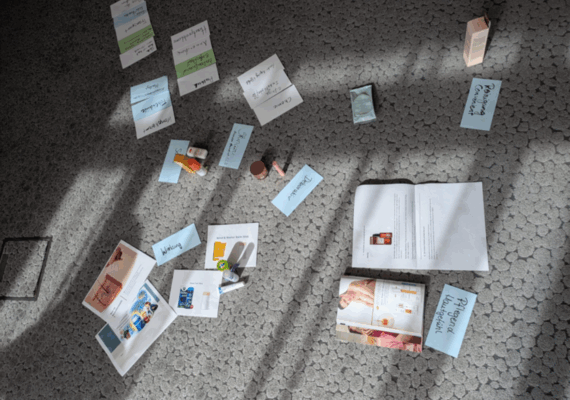
The answers were collected, discussed, and then systematically clustered. It quickly became clear that successful products are rarely defined solely by their ingredients.
Much more important are factors such as:
- simple and intuitive application
- a pleasant skin feel
- time-saving and convenience
- established routines and habits
- as well as a truly noticeable effect
Trends also played a role, especially influences from Korea and Japan, which are currently shaping many product concepts and routines.
Phase 2: Where is the real problem?
In the next step, the perspective was deliberately shifted:
What is annoying about cosmetics? What is frustrating in the daily routine?
The answers painted a clear picture:
- an oversupply of products
- increasingly complex routines
- a high time investment
- and the expectation that users have to engage more and more with ingredients and application
Of course, our main topic of solid products was also discussed. The specific challenges were addressed: how they are stored, how they are used, transport during travel, etc.
This honest analysis was crucial, because only through a clear understanding of the problems do relevant and marketable solutions emerge.
Phase 3: From ideas to implementable concepts
Based on the identified focus areas, four teams were formed.
The task was deliberately defined to be clear yet restrictive:
Each team developed a concrete product, including a clearly defined customer benefit, sales concept, market analysis, as well as operational parameters such as MOQ, packaging, and production logic.
The key point was:
Each idea had to be realistic and feasible using the existing machines and within the current processes.
This filter was intentionally strict.
Many good ideas failed because of it, and that was exactly the intention.
Phase 4: Pitch & critical evaluation
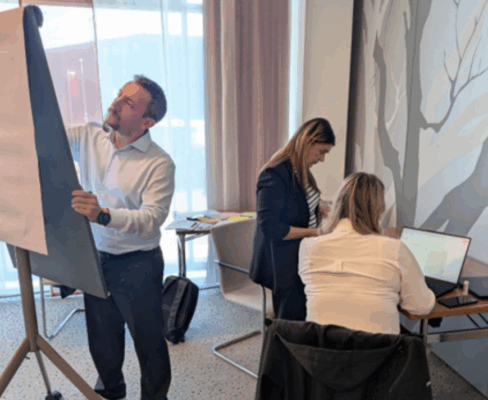
The developed concepts were then presented and not only introduced, but also rigorously questioned.
The focus was clearly on validation:
- Is the benefit truly relevant?
- Is there a clearly defined target group?
- Is the implementation technically and operationally realistic?
- Does the product align with our strengths?
This critical perspective was essential, because not every good idea is also a feasible idea.
In this case, however, all four concepts were convincing, both in terms of content and operational feasibility.
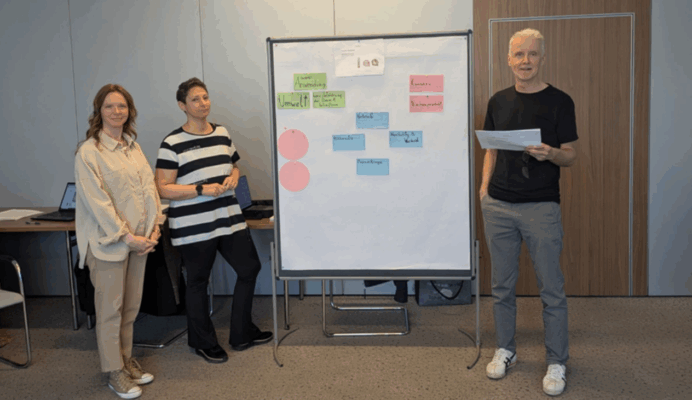
Result: Four products with a clear path to implementation
At the end of the day, there were four fully developed product concepts.
Not as loose ideas, but as well-thought-out concepts with clear positioning, defined benefits, and a concrete implementation strategy. Timelines have already been set for all four products, and their implementation is planned.
These products will be brought to market within the next six months.
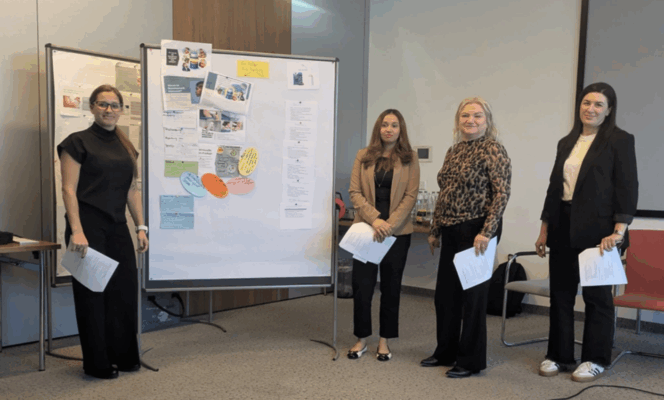
Conclusion
The added value of this format lay not only in the results, but in the structured approach:
- exchange between development, sales, and other departments
- focus on real customer needs instead of internal assumptions
- a clear connection between the idea and operational feasibility
Or put differently:
Less theoretical innovation, more products that actually make it to market.
The world of cosmetics
Would you like to receive news about cosmetics by e-mail once a quarter?