

 DE
DE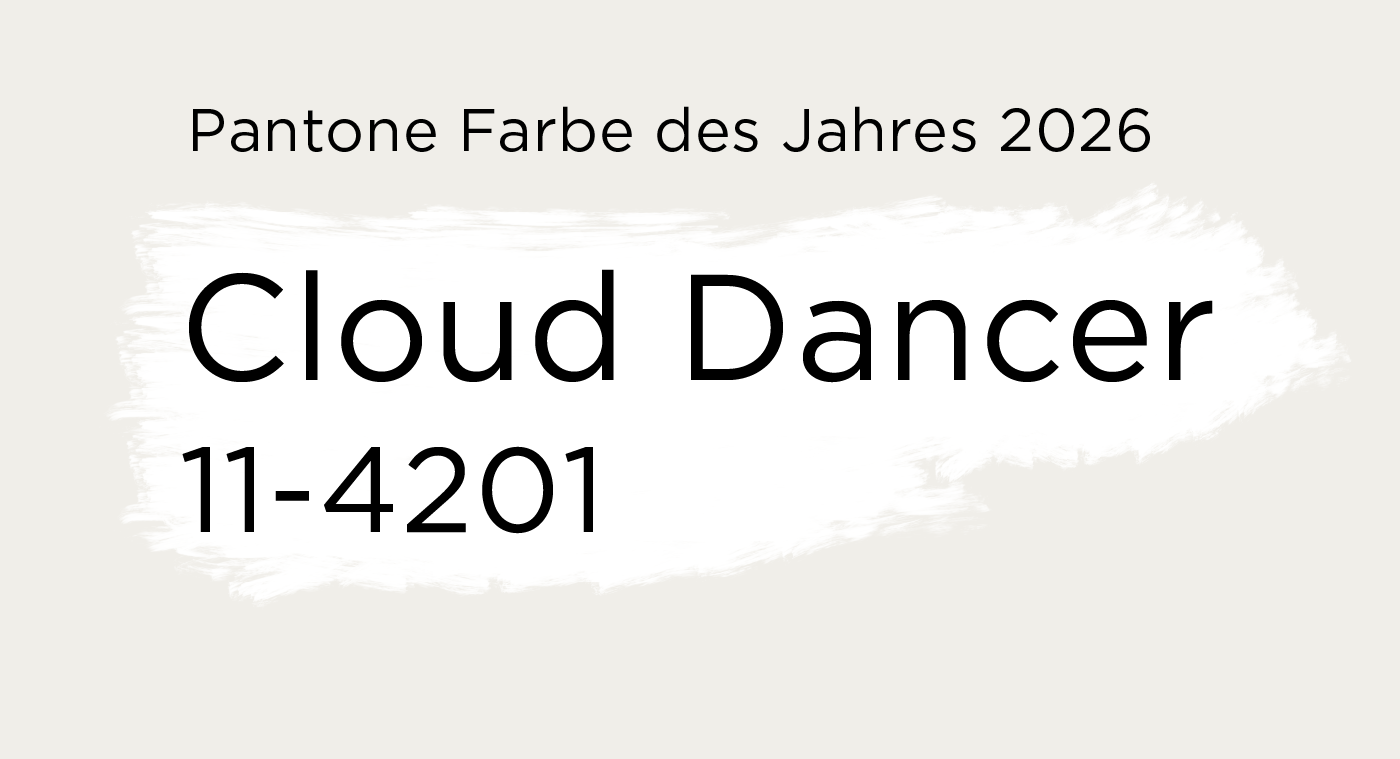
With the choice of Cloud Dancer as the trend color for 2026, a color palette comes into focus that consciously embraces restraint. A light, airy white that conveys calm, clarity, and balance. Cloud Dancer feels organizing rather than intrusive, making it exemplary of current cosmetic trends that focus less on sensory overload and more on orientation.
For the cosmetics industry, this development is more than just a question of design. Color trends reflect changing consumer expectations. Transparency, credibility, and reduction are gaining importance. Brands are responding with calm color palettes, clear lines, and a stronger emphasis on substance.
Cosmetic trends are not an end in themselves. They are signals of technological developments, changing consumer expectations, and strategic positioning in the competitive landscape.
This article shows why cosmetic trends in 2026 are continuously evolving, which forces are driving them, and how brands can use color and ingredient trends without losing their substance.
Color Trends in Cosmetics 2026: Why Colors Are More Than Just Design
Colors work faster than content. Within just a few seconds, they influence whether a cosmetic product is perceived as high-quality, trustworthy, dermatological, or modern. Color trends create emotional orientation even before ingredients or claims are read.
That is why color trends play a central role in cosmetic brand strategy. They convey attitude, ambition, and positioning at first glance.
Pantone Color of the Year 2026: Cloud Dancer
Pantone has declared the color PANTONE 11-4201 Cloud Dancer as the Color of the Year for 2026. A light, almost floating white that stands for calm, clarity, and balance.
This trend color particularly appeals to cosmetic brands that aim to convey reduction, seriousness, timelessness, and modern competence. Cloud Dancer is equally suitable for product design, packaging, and brand identity. Especially in the premium and dermocosmetics segment, this color world supports trust and credibility.
Color trends like Cloud Dancer are not short-lived fashions. They are visual responses to a changing market environment.
From Color Trends to Ingredient Trends in Cosmetics: When Design Shapes Expectations
Where color palettes convey calm and clarity, expectations of the product itself rise at the same time. Reduction in design goes hand in hand with higher demands for efficacy, transparency, and verifiability.
At this point, ingredient trends in cosmetics come into focus. They are the substantive counterpart to what color trends promise visually.
Why Do New Ingredient Trends Constantly Emerge in Cosmetics?
Scientific Progress and Accelerated Communication
New raw materials, new technologies, new delivery systems, and new studies are constantly emerging. At the same time, communication channels have accelerated significantly. Innovations that once took years to reach the market are now positioned as so-called hero ingredients within just a few months.
Scientific innovation and communicative amplification often develop simultaneously.
Rising Expectations for Efficacy and Verifiability
The cosmetics market is clearly moving toward scientifically grounded, clinically inspired solutions. Ingredient trends around skin regeneration, barrier strengthening, anti-inflammatory effects, or longevity are emerging as a direct response to this development.
Ingredient trends are therefore not a gimmick, but an expression of rising consumer expectations.
New Ingredients, Familiar Skin Concerns
Many ingredient trends do not address new skin concerns. Anti-aging, sensitive skin, pigmentation, or blemishes have accompanied the cosmetics industry for decades. What is new are primarily the approaches. Biotechnological ingredients, multifunctional concepts, and intelligent combinations are coming into focus.
Progress lies less in the topic itself and more in the quality of its execution.
Why New Ingredients Do Not Automatically Mean Better Cosmetics
A new ingredient name alone does not make a better product. The real difference lies deeper.
Formulation as the Decisive Success Factor
Ingredients do not work in isolation. Concentration, stability, pH level, solvent systems, emulsion types, sensory properties, and the interaction of all ingredients determine the actual product performance.
A high-quality ingredient cannot unfold its full potential in an unbalanced formulation. Conversely, a well-designed formulation with familiar ingredients can deliver above-average results.
The Often Underestimated Role of Base Ingredients
Emulsifiers, stabilizers, lipids, humectants, and thickeners are rarely at the center of communication. Yet they carry the entire product performance. Without this foundation, there is no stability, no pleasant application, and no long-term efficacy.
A more in-depth perspective on the role of base ingredients, emulsion types, and formulation logic can be found in our article on the fundamentals of modern cosmetic formulations.
Using Cosmetic Trends Strategically: Substance Over Short-Term Hype
Successful cosmetic brands do not chase trends unreflectively. They integrate them strategically.
Trend ingredients and trend colors create attention. However, sustainable brand success is built on consistent quality, reliable performance, and a clear product logic. A modular approach has proven particularly effective. Stable base formulations are selectively further developed through ingredients, textures, or visual accents.
Conclusion: Cosmetic Trends 2026 Between Color, Ingredients, and Substance
Cosmetic trends 2026 do not emerge by chance. They reflect scientific progress, changing consumer expectations, and the growing need for orientation in a complex market. Color trends like Cloud Dancer create visual calm and trust. Ingredient trends respond to the desire for efficacy, transparency, and verifiable results.
What truly matters, however, is not the individual trend, but how it interacts with the product, the formulation, and the brand logic.
The Key Takeaways for Cosmetic Brands:
- Color trends are an attitude, not decoration.
Reduced color palettes like Cloud Dancer only work sustainably when they reflect a clear brand positioning and substantive depth. - Quiet design raises the demands on the product.
The calmer the visual language, the more formulation, efficacy, and user experience move into focus. - Ingredient trends require expert contextualization.
Not every new ingredient represents progress. What matters is stability, integration into the formulation, and a comprehensible, proven effect. - Differentiation arises through execution, not through buzzwords.
Familiar skin concerns remain relevant. Innovation is reflected in intelligent combinations, not in constantly new names. - Long-term brand success is built on systems thinking.
Cosmetic trends should be understood as impulses that further develop existing product architectures, rather than driving short-term, isolated products.
The strongest cosmetic brands do not choose between trend and substance. They consistently combine both, securing trust, recognizability, and long-term relevance.
The world of cosmetics
Would you like to receive news about cosmetics by e-mail once a quarter?