

 DE
DE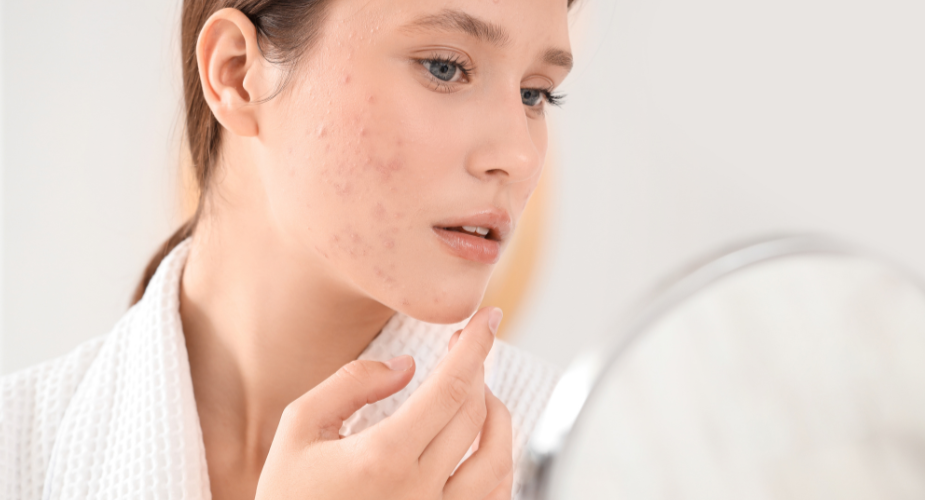
Many people automatically associate pimples with puberty. However, blemished skin is also widespread in adulthood and particularly common among women. Sudden inflammation, deep-seated breakouts, or an uneven complexion can persist long after the teenage years or newly develop later in life.
What’s important to understand is that blemished skin in adulthood is generally not a sign of poor hygiene. It usually results from a combination of several factors: hormonal influences, changes in sebum production, inflammatory processes, stress, and, in some cases, a weakened skin barrier.
Those who understand what is really happening in the skin can respond in a targeted way and, instead of working against the skin, support it effectively and thoughtfully.
In this article, we take a closer look at the biological processes behind adult acne, why over-treating the skin can be harmful, and how a simple, gentle three-step routine can help restore balance to the skin.
How Is Blemished Skin in Adulthood Different?
As we age, the skin changes. Regeneration processes may slow down, and the skin often becomes more sensitive to external influences or intensive skincare.
Adult acne often appears in the lower part of the face, particularly on the chin, jawline, and lower cheeks. This distribution pattern is often described as “hormonally influenced,” but it is not exclusively caused by hormonal factors.
Many affected individuals also report what feels like contradictory skin: it appears oily, yet at the same time feels dry or tight. This phenomenon may be linked to a compromised skin barrier or to irritating over-treatment of the skin.
What Happens in the Skin in Adult Acne?
The development of acne, even in adulthood, is based on several biological processes:
- Altered Sebum Production
Hormonal signals, particularly androgens, influence both the amount and the composition of sebum. - Disrupted Keratinization (Hyperkeratinization)
Dead skin cells do not shed completely, which can cause pores to become clogged or narrowed. - Microbial Imbalance
The bacterium Cutibacterium acnes plays a role in the development of inflammation. - Inflammatory Immune Response
The immune system reacts, leading to visible redness, swelling, or painful lesions.
In adulthood, a compromised skin barrier may also be present. Whether this is a cause or a consequence of acne varies from person to person. What is clear, however, is that an unstable barrier increases the skin’s susceptibility to irritation.
Hormones as a Contributing Factor
Sebaceous glands are highly sensitive to hormonal signals. Hormonal fluctuations can quickly alter the skin’s condition. Cycle-related changes, switching hormonal contraception, pregnancy, or the period before menopause can all directly affect sebum production.
Hormonally influenced adult acne often occurs in flare-ups. The skin may appear shiny yet sensitive at the same time and frequently reacts sensitively to aggressive skincare products.
During such phases, stabilization is more important than intensive treatment. A calm, barrier-supporting skincare routine helps the skin regain its balance.
Stress and Its Visible Effects on the Skin
Chronic stress affects the entire body, including the skin. Stress hormones can increase sebum production, intensify inflammation, and impair the skin’s ability to regenerate.
Often, it is not a single stress factor but rather the combination of little sleep, high mental strain, and a lack of recovery periods. These factors can significantly worsen blemished skin in adulthood.
A holistic approach to skincare therefore also includes lifestyle factors and stress management.
When Over-Treating the Skin Weakens the Skin Barrier
Modern skincare offers many effective ingredients. However, overly frequent exfoliation, potent active ingredients, and harsh cleansing products can damage the skin barrier.
A weakened skin barrier leads to increased moisture loss and greater sensitivity. The skin may react with redness, tightness, and a heightened tendency toward inflammation. Paradoxically, it can also produce more sebum in an attempt to compensate for the loss.
Especially in cases of adult blemished skin, a gentle and consistent skincare routine is often more effective than a complex regimen with numerous active ingredients.
The Role of the Skin Barrier in Blemished Skin
The skin barrier is the skin’s protective system. It retains moisture within the skin and shields it from external irritants. When intact, the skin appears balanced and resilient.
A damaged barrier can manifest as tightness, redness, flaking, and increased sensitivity. Many people report that even familiar products are suddenly no longer well tolerated.
Strengthening the skin barrier is therefore a key component in caring for blemished skin in adulthood.
A Simple 3-Step Routine for Blemished Skin in Adulthood
A minimalist, well-considered routine helps prevent overwhelming the skin while still providing targeted support.
Step 1: Gentle Facial Cleansing
The goal of cleansing is to purify the skin without compromising its protective function.
A mild, non-drying cleanser used morning and evening removes excess sebum and environmental impurities. Lukewarm water and gentle movements are sufficient. A feeling of tightness after cleansing is often a sign that the products used are too harsh.
Step 2: Targeted Lipid Support
Lightweight, non-comedogenic oils can help stabilize the skin’s lipid structure. A facial oil stick allows for precise and economical application.
It provides comfort, reduces feelings of tightness, and supports the skin barrier without clogging the pores. This step is especially beneficial for blemished skin that is also dehydrated.
Step 3: Protection and Soothing
A facial care stick forms a protective, soothing layer. It supports regeneration and promotes a balanced skin feel.
What matters is a light application. Consistency is more important than the amount of product used.
What Else Helps Restore the Skin’s Balance
Patience is essential. The skin needs time to respond to changes. Introducing too many product changes at once makes it difficult to recognize real progress.
Often, less is more. A streamlined and consistent routine can be surprisingly effective for blemished skin in adulthood.
Bei anhaltenden oder schweren Beschwerden ist eine dermatologische Abklärung sinnvoll, insbesondere wenn hormonelle Faktoren vermutet werden.
Conclusion
Blemished skin in adulthood is not a coincidence, but a signal from the skin. Hormones, stress, over-treatment, and a weakened skin barrier often interact and contribute together.
Instead of fighting the skin, it is worth supporting its natural functions. A gentle, structured skincare routine can help restore balance and promote a calmer complexion in the long term.
The world of cosmetics
Would you like to receive news about cosmetics by e-mail once a quarter?