

 DE
DE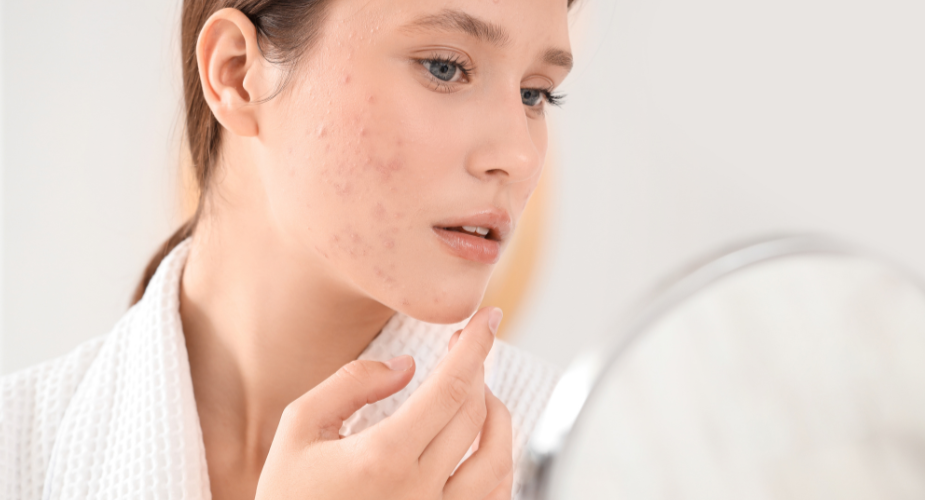
Many people automatically associate pimples with puberty. However, the skin can also be prone to blemishes in adulthood. Blackheads, individual inflamed spots, or an uneven complexion often appear long after the teenage years and particularly affect women.
It is important to make a clear distinction: blemished skin is not automatically acne.
Blemished skin initially describes a skin condition. This can include blackheads, individual inflamed spots, increased sebum production, or an uneven complexion. It is therefore a broader term for skin that tends to experience clogged pores and occasional inflammation.
Acne, on the other hand, is an inflammatory skin disease that is diagnosed dermatologically. It is usually characterized by multiple recurring inflammatory skin lesions and, in more severe forms, can also cause deeper nodules or scarring.
Many adults therefore experience blemished skin with occasional inflammatory spots, without necessarily having medically diagnosed acne.
In this article, we take a closer look at the biological processes behind blemished skin in adulthood, why over-treating the skin can place additional stress on it, and how a simple, gentle three-step routine can help bring the skin back into balance.
How Is Blemished Skin in Adulthood Different?
As we age, the skin changes. Regeneration processes often slow down, and the skin tends to become more sensitive to external influences or intensive skincare products.
Blemishes in adulthood often appear in the lower part of the face, especially on the chin, jawline, and lower cheeks. This distribution pattern is often associated with hormonal influences.
Many people affected also report skin that seems contradictory: it may appear shiny or oily, while at the same time feeling dry or tight. This phenomenon can be linked to a weakened skin barrier or to overly intensive skincare routines.
What happens in the skin during inflammatory blemishes?
Blemished skin usually develops through several processes that can occur simultaneously within the skin.
Altered sebum production
Hormonal signals, particularly androgens, influence the amount and composition of sebum. Increased sebum production can cause pores to become clogged more easily.
Disturbances in the skin’s keratinization process
Dead skin cells do not always detach completely from the skin’s surface. As a result, pores can narrow and blackheads may form.
Microbial balance of the skin
Certain skin bacteria, including Cutibacterium acnes, are part of the skin’s natural flora. If this balance becomes disrupted, inflammatory blemishes can develop.
Inflammatory reactions of the skin
When clogged pores and bacterial processes occur together, the immune system may react. This can lead to visible redness, swelling, or painful inflamed spots on the skin.
In adulthood, the stability of the skin barrier often also plays an important role. A weakened skin barrier can make the skin more sensitive to external influences.
Hormones as a Contributing Factor
Talgdrüsen reagieren empfindlich auf hormonelle Signale. Hormonelle Schwankungen können deshalb auch im Erwachsenenalter das Hautbild deutlich verändern.
Cycle-related changes, a change in hormonal contraception, pregnancy, or the period before menopause can directly affect sebum production.
Many people notice recurring blemishes during such phases. At the same time, the skin may become more sensitive to strong active ingredients or aggressive skincare products.
In such situations, the focus is often not on intensive treatment, but rather on stabilizing the skin through calm, barrier-supporting skincare.
Stress and Its Visible Effects on the Skin
Chronic stress affects the entire body, including the skin.
Stress hormones can increase sebum production, intensify inflammatory processes, and affect the skin’s ability to regenerate. At the same time, prolonged stress often reduces sleep quality, which can also impact the appearance of the skin.
Often, it is not a single stress factor but rather the combination of mental strain, limited recovery, and irregular sleep patterns that can promote skin blemishes.
A holistic approach to skincare therefore also includes lifestyle, sleep, and stress management.
When Over-Treating the Skin Weakens the Skin Barrier
Modern skincare offers many effective ingredients. However, too many products, frequent exfoliation, or strongly active ingredients can place additional stress on the skin barrier.
A weakened skin barrier causes the skin to lose moisture more quickly and become more sensitive to external influences. Redness, tightness, and irritation can be the result.
Paradoxically, in such situations the skin may produce even more sebum in an attempt to compensate for the loss of moisture.
Especially in the case of blemished skin in adulthood, a gentle and reduced routine is often more beneficial than a complex skincare regimen with many active ingredients.
The Role of the Skin Barrier in Blemished Skin
The skin barrier is the skin’s natural protective system. It keeps moisture inside the skin while at the same time protecting it from external irritants.
When this barrier is intact, the skin appears more balanced and resilient. However, if it becomes weakened, this can manifest as tightness, redness, or increased sensitivity.
Many people report that during such phases, even products they previously tolerated well can suddenly become irritating.
Strengthening the skin barrier is therefore a key part of achieving long-term stable skincare.
A Simple 3-Step Routine for Blemished Skin in Adulthood
A minimalist routine can help support the skin without placing additional stress on it.
Step 1: Gentle Facial Cleansing
Cleansing should remove excess sebum, dirt, and environmental residues without compromising the skin’s natural protective function.
A gentle cleanse in the morning and evening is usually sufficient. Lukewarm water and soft movements are often enough. A strong feeling of tightness after cleansing can indicate that the product is too harsh or overly stripping.
Step 2: Targeted Lipid Support
Light, non-comedogenic oils can help stabilize the skin’s lipid structure.
A face oil stick allows for precise and economical application. It can help reduce feelings of tightness and support the skin barrier without unnecessarily burdening the pores.
This step can be particularly helpful for dehydrated yet blemish-prone skin.
Step 3: Protection and Soothing
A face care stick can form a soothing, protective layer on the skin.
It supports the skin’s regeneration and contributes to a more balanced skin feeling. A light and consistent application is important.
Often, it is not the amount of product that matters, but the consistency of the routine.
What else can help
Patience plays an important role. The skin needs time to respond to changes.
Too many product changes in a short period of time make it difficult to assess the effects of individual skincare products. Often, a reduced routine applied consistently can give the skin more stability.
For persistent or more severe skin concerns, dermatological advice can be helpful, especially if hormonal influences are suspected.
Conclusion
Blemished skin in adulthood is not an unusual phenomenon. Hormonal changes, stress, disruptions of the skin barrier, or overly intensive skincare can together contribute to the skin becoming unbalanced.
Instead of overwhelming the skin with ever-new products, a gentle and structured skincare routine can help support its natural functions.
A calm routine, patience, and a better understanding of your skin’s needs can contribute to a more balanced complexion in the long term.
The world of cosmetics
Would you like to receive news about cosmetics by e-mail once a quarter?