

 DE
DE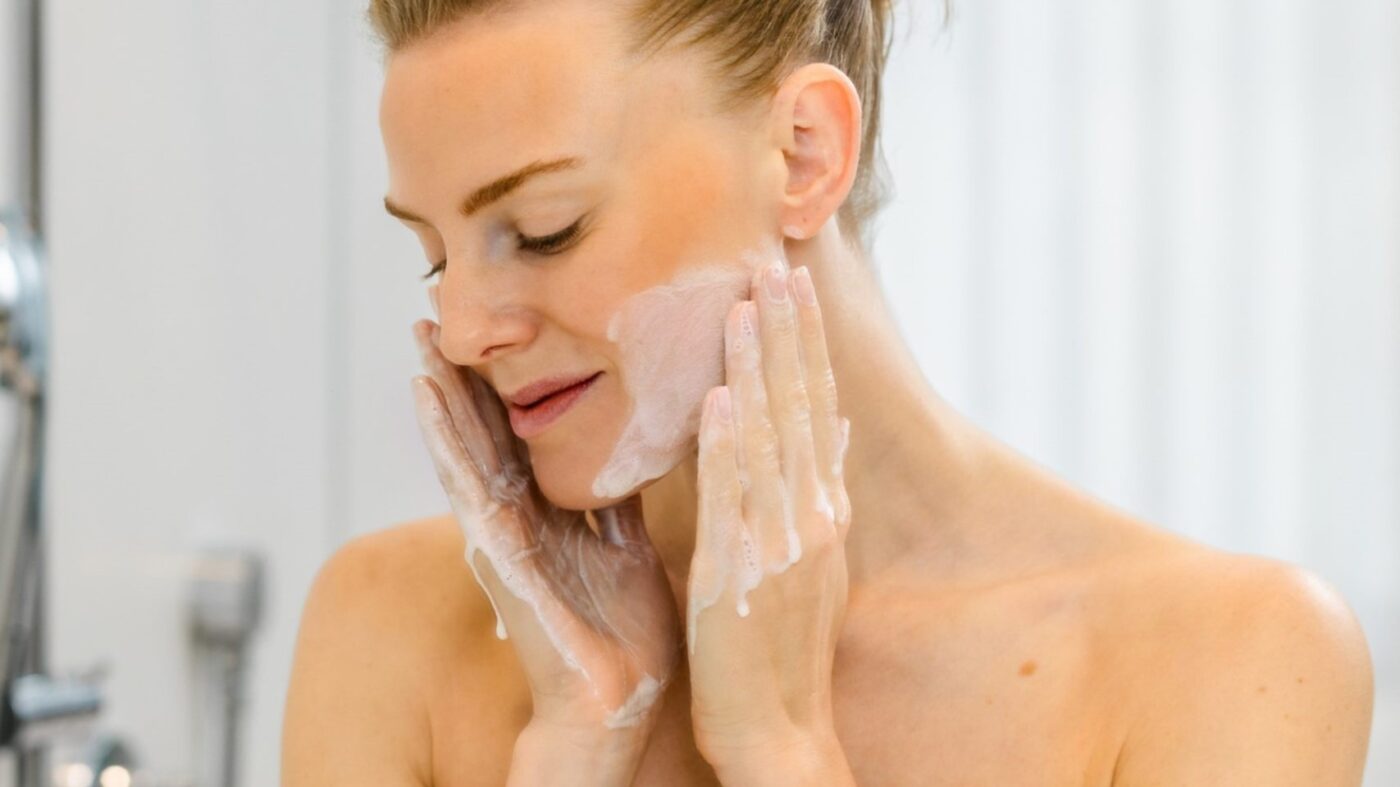
Let’s be honest: You know you should cleanse your face in the evening. Still, there are days when you simply skip it – because you’re tired, it’s late, or it just doesn’t seem important at the moment.
You’re not alone in this. Many people think it doesn’t make much of a difference if they skip cleansing occasionally.
This is exactly where a common misconception lies.
Facial cleansing is not an optional extra, but the foundation of any effective skincare routine. Over the course of a day, dirt, sebum, sweat, and residues from skincare products or makeup accumulate on the skin. If these are not removed regularly, it can put a strain on the skin in the long term.
At the same time, good cleansing doesn’t mean stripping the skin as much as possible or making it “completely clean.” Products that are too harsh or overly intensive routines can disrupt the skin barrier and do more harm than good.
So it’s not about doing as much as possible, but about doing the right things. Gentle, balanced facial cleansing helps the skin maintain its natural balance and be optimally prepared for further care.
Why is cleansing so important for skin health?
Imagine what your skin goes through on a completely normal day. In the morning, you apply your skincare, maybe also makeup – and then your day begins. All the while, your skin is working: protecting you from cold, wind, and the pollutants in city air. By evening, all of this has built up – an invisible layer of fine dust, sebum, sweat, and residues from all the products you’ve used throughout the day.
If you don’t wash it off, your skin is not simply “dirty.” The accumulated substances interfere with the skin’s natural renewal process and make it harder for your evening skincare to truly work effectively.
Gentle facial cleansing also helps to:
✦ prepare the skin for subsequent skincare products
✦ support the skin’s natural balance
✦ not hinder skin renewal
But it depends on how you cleanse. This is exactly where most mistakes happen.
The skin’s acid mantle – what you should know about it
It sounds a bit scientific, but it’s actually quite simple: there is an invisible protective film on the surface of your skin. This is the so-called acid mantle – and it is your first line of defense against external influences.
It has a slightly acidic pH value, somewhere between 4.5 and 5.5. This is no coincidence. In this range, harmful bacteria find it harder to multiply, the skin microbiome remains balanced, and the skin barrier is more stable.
The problem arises when you use cleansing products that disrupt this balance – either because they strip away too much oil or because their pH level is far from the skin’s natural range. In this case, the protective mantle is weakened – and your skin is increasingly less able to do its job.
A gentle cleansing product with a skin-friendly pH, on the other hand, cleanses in a way that does not destroy what your skin has built up.
Why overly aggressive cleansing can be problematic
You probably know this feeling: after washing, your skin feels tight, almost “squeaky clean.” Many people see this as a sign of cleanliness. In reality, it’s a warning sign.
If your skin feels tight after cleansing, it means that its natural lipid layer – the protective film it needs – has been partially or completely stripped away. The skin reacts to this: either it becomes dry and more sensitive, or, on the contrary, it increases sebum production to compensate for the loss.
In both cases, you end up worse off than before.
Strongly foaming, intensely degreasing cleansing products reliably remove dirt – but unfortunately they don’t distinguish between “bad” substances and the skin’s own protective layer. The result: skin that feels clean in the short term, but a disrupted balance in the long term.
Exfoliation is good – but in moderation
There are many misconceptions about exfoliation. Some swear by it, others avoid it completely. The truth lies somewhere in between.
Your skin is constantly renewing itself. New cells form in the deeper layers and slowly move to the surface – this process takes about 28 to 40 days. In the end, the dead cells shed, making room for fresher, smoother skin.
A gentle exfoliation can support this process a little – if needed. There are two basic types:
Mechanical exfoliation – works with small particles and removes dead skin cells through friction.
Chemical exfoliation – uses acids like AHA or BHA, which gently dissolve the bonds between the cells.
But if you use it too often or too intensely, you achieve the opposite. The renewal cycle can be disrupted, the skin becomes irritated and more sensitive, and it loses more moisture. The question is not whether you exfoliate – but how much, and in what condition your skin currently is.
Gentle facial cleansing as the foundation of balanced skincare
The best skincare routine isn’t necessarily the longest or the one with the most products. Often, it’s simply the one that does no harm to your skin, so it doesn’t have to recover first.
Gentle facial cleansing doesn’t mean doing less. It means doing it smarter. You remove the residues – but you don’t strip away what your skin needs.
What matters:
✦ Choose a cleansing product with milder surfactants – it cleans effectively without compromising the natural protective layer.
✦ Pay attention to the pH – a product close to the skin’s natural pH disturbs the balance less.
✦ Don’t strip too much – the skin needs its own lipids to retain moisture and protect itself.
The natural skin renewal
Your skin isn’t static. It’s constantly working, constantly renewing itself – even while you sleep.
New cells form in the deeper layers and move to the surface over the course of weeks. This cycle lasts on average four to six weeks. When it can proceed without disruption, the skin appears smoother and more even.
The good news: a gentle, balanced cleansing routine already does a lot to help this process run smoothly.
Balance is crucial – now and in the long term
There is no single perfect routine that works the same for everyone. But there is one principle that almost always holds true: your skin is not an enemy to be conquered. Rather, it’s a partner worth understanding.
A simple, balanced routine – gentle cleansing, respectful care of the skin barrier, moderate exfoliation – is often more effective than the most complex multi-step protocol.
Conclusion – gentle facial cleansing supports skin renewal
Facial cleansing is one of the most important steps in your daily routine – but it only delivers its best results when done correctly.
Overly aggressive cleansing isn’t good for the skin. Neither is exfoliating too often. The real goal is to cleanse your skin without taking away what it needs.
Less, but done right – that’s what truly matters in the long run.
The world of cosmetics
Would you like to receive news about cosmetics by e-mail once a quarter?